
Pakistan Adoption Information
Download Program PDF
Process of Adopting from Pakistan
Note: At least one prospective adoptive parent must be of Pakistani descent in order to adopt from Pakistan.
IN COUNTRY PROVIDER: Although the US requires adoptive families to work through a US Hague accredited agency, Pakistan does not work with US adoption agencies. The local authorities consider the process to be a domestic placement with Pakistan citizens. The Guardianship process within Pakistan is an independent process initiated directly by the Pakistani citizen. Hope International can serve as the Primary Adoption Service Provider for families who want to work with Edhi Foundation in Karachi or the Child Protection Bureau (CBP) in Lahore, and we can refer families to licensed attorneys who have experience in guardianship.
TIMEFRAME: Depending on many different factors, including the number of eligible children at the time of your availability to travel to Pakistan, the timeframe to prepare your initial paperwork and be matched with a child can take 9-12 months. Then it can take an additional 4-6 months to obtain the child’s visa for entry into the United States.
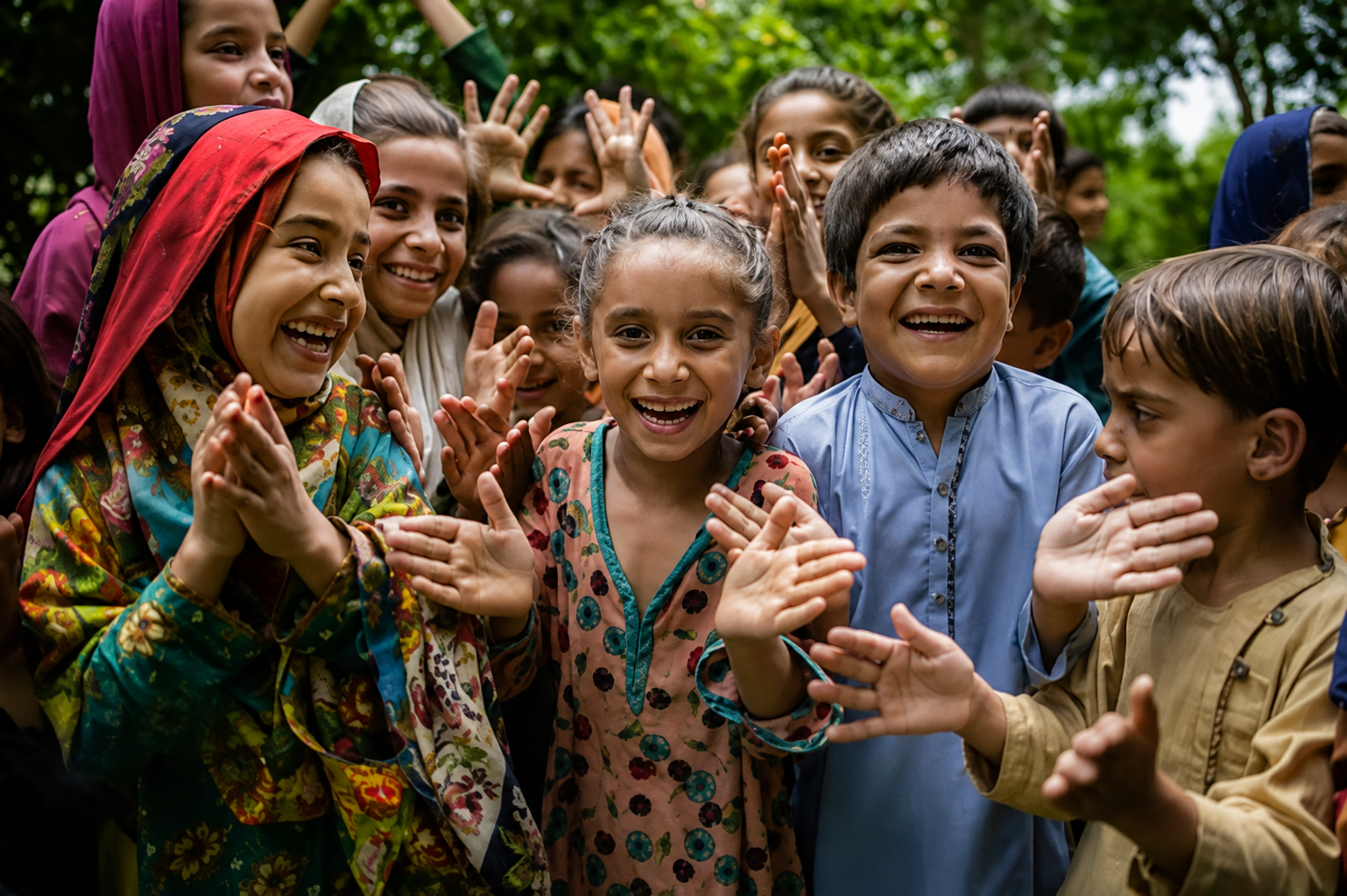
THE CHILDREN: Children available for adoption in Pakistan are often orphaned due to the stigma of being an unwed mother, poverty, as well from disease and natural disasters. The children available for intercountry adoption from Pakistan are newborns-15 years old. There are also sibling groups and children with special needs living in government orphanages in need of an adoptive family.
PROCESS of Adopting from Pakistan
As with all of Hope’s adoption programs, you must first participate in a general information meeting/phone call prior to contracting with the agency. Once this meeting has taken place and you decide to work with Hope International, you will submit an application. Next the Executive Director will prepare your contracting documents. Once you have reviewed and signed the contracts and paid the initial agency and service fees, you can immediately begin working on your home study for USCIS approval. Hope strives to offer the fullest level of support and services possible in order to complete your adoption in the quickest manner possible. While there are many aspects outside of Hope’s control with adoption and foreign adoptions in particular, Hope has found during years of experience that hard work on things that can be controlled – paperwork, preparing and reviewing documents, etc. – usually quickens your overall adoption process.
- Completion of an International Home Study – For families that live in Texas, Hope International will conduct the home study. If you live outside of Texas, Hope will assist you to find an agency to conduct your home study. Hope International will supervise this agency, and the agency must meet the standards for a supervised provider and use employees to conduct the home study. Your final USCIS approval is contingent upon the recommendation for approval given by your home study agency. Your completed home study is valid for 12 months; an update will be necessary annually until a child is placed in your home and is also required if your living circumstances change prior to your adoption, such as change in health or residence. You are also required to obtain a medical, complete at least ten hours of pre-adoptive training, and to have both criminal and child abuse background checks. Hope will assist you with referrals for this training and in obtaining the clearances.
- Apply to U.S. Citizenship and Immigration Services (USCIS) – USCIS must pre-approve you as potential adoptive parents regarding an international adoption. Hope International will assist you by reviewing and submitting an I600A application to USCIS with your completed home study. USCIS must approve your ability to provide proper parental care for a child. Your USCIS approval will be valid for 18 months, however, your fingerprints are only valid for 15 months and must be valid at the time of the child’s visa appointment.
- Pakistan Process – Once you have completed the home study and received approval of your I600a application from USCIS, you are ready to submit an application to an orphanage. You must work with a governmental orphanage (Child Protection Bureau in Lahore) or Edhi Foundation.
- Child Referral – During the home study process you will clarify the type of child you feel most equipped to parent. It is important to be honest with identifying the child you would like to adopt. It is helpful to take an inventory of your child preferences and to prioritize the most important characteristics (i.e. – sex, age, health status, etc.) Please be advised that if your list of criteria is too restrictive, you may significantly narrow your referral options. You will visit the orphanage in person and be shown a child that is legally free for adoption, which is a child that has been abandoned. You can review the medical and social information that the orphanage director has collected on the child, although this is often limited. Information regarding birth parents is usually not available. You will receive permission from the orphanage to take the baby to a doctor for an evaluation.
- Hope strongly encourages you to have the child’s information evaluated by a doctor skilled in evaluating intercountry adoption referrals. While in Pakistan, you can email and fax medical information to doctors in the U.S., and you can take the child to a local doctor in Karachi or Lahore for evaluation as well. All social and medical documents will need to be translated into English for the U.S. doctors as well as for the U.S. Embassy. Once a doctor has given you their evaluation of the child’s referral information, you will have at least two weeks to consider the referral information, barring extenuating circumstances and based on the child’s need for a more immediate response. You will also communicate with Hope staff about the child you want to be matched with so that Hope staff can counsel you about the referral.
- Child Release: Once you feel comfortable with the information you have on the child, you will work with the orphanage to obtain formal release/guardianship. This differs between orphanages.
- Pakistani Paperwork: you will get the birth certificate, NIC (national identity card), FRC (family registration certificate), and CRC (child registration certificate) as well as the child’s Pakistani passport. Note: while the B-form is optional for the passport, you need to complete this as well. If the Pakistani passport is lost, they will not issue another passport without the B form.
- Guardianship: Using an attorney of your choice, you will initiate the guardianship paperwork. For Edhi, this is in Karachi, and for CPB, this is in Lahore. Note that a bond in the child’s name may be required by the court.
As part of this process, you will have to place an ad about the baby asking for any living relatives. Your attorney should guide you through this. Please note that the orphanages may have their own requirements in addition to the embassy ones. - I-600 Submission: Once guardianship is completed, you can gather the documents for the I-600, Petition to Classify the Child as an Immediate Relative, to submit to the Embassy in Islamabad. You will then get an interview notice.
- Medical: Once you get the interview notice, you will complete the visa medical exam in Islamabad or Lahore. This can only be done once the interview is set, and the medical has to be completed before the interview. This is usually a time crunch, since you just get a few days notice.
- Visa Interview: You will have your interview at the Embassy in Islamabad. If no issues are found in the paperwork, the visa could be issued in 5-10 days.
- Post-Placement Supervision and Adoption Finalization– When you return home, Hope International or your home study agency will provide post-placement supervision as required by the State of Texas and your state of residence so that your adoption can be finalized in a U.S. court. At the completion of the initial post placement period, you will be ready to proceed with your adoption finalization. Hope International will refer Texas families to a local family law attorney. If you reside outside of Texas, Hope recommends that you contact a member of the American Academy of Adoption Attorneys (AAAA) regarding the completion of an adoption in your state.
- Certificate of Citizenship – The child will not qualify for citizenship until you enter the U.S. and have completed an adoption finalization, then you must apply for the Certificate of Citizenship with form N-600.
Qualifications for
Adopting from Pakistan
U.S. Requirements:
- You must be a U.S. citizen. If you are married, your spouse must also be either a U.S. citizen or in legal status in the United States.
- If you are unmarried, you must be at least 25 years old.
- You cannot currently be on probation or parole or have any pending criminal proceedings.
Texas Requirements:
- You cannot have a felony conviction against a person.
- You cannot have a child abuse referral with a finding of “sustained or unable to determine.”
Pakistan Requirements:
Pakistan has no statute that provides for the adoption for children. Each child placing entity has their own preferences and guidelines for who they will place children with. They also seem to be willing to make exceptions once relationships have been established.
- Citizenship: At least one of the prospective guardians must provide proof of Pakistani descent, and have a National ID card.
- Age: Prospective Adoptive Parents must be at least 18 years old; Pakistani law does not specify a maximum age for adopting parents.
- Marital Status: Both married and single persons may adopt. Pakistan does not recognize same-sex marriage. Some orphanages will not place a child in a family where one of the parents has been divorced.
- Religions: children can only be placed with adoptive parents of the same religion. When children are abandoned, it is assumed that they are Muslim, so the vast majority of children available for adoption are Muslim.
- Other children in the home: preference is for there to be no other children in the home; exceptions can be made. Pakistan prioritizes placement with infertile couples.
- Income: Pakistan law does not establish a minimum income requirement for guardians. However, a prospective guardian must prove to the Family Court judge that he/she is able to feed, shelter, and educate the child.
- Substance use and criminal history: Substance use or criminal history by a prospective guardian could be an issue for Pakistan and must be discussed on a case-by-case basis
- Guardianship: Pakistan law does not allow for final adoptions of Pakistani children in Pakistan. Prospective adoptive parents considering adopting a Pakistani child will obtain guardianship from a Pakistani court and subsequently be required to finalize the adoption of the child in the United States according to the laws of their state of residence, which vary greatly. This will also necessitate that the family must then apply for the child’s Certificate of Citizenship, which is not issued automatically in IR4 visa cases.
- Families may adopt more than one child at a time as long as they receive home study and USCIS approval to do so.
Get in touch with
Hope International
Call us at 214-672-9399 or contact us using this form: